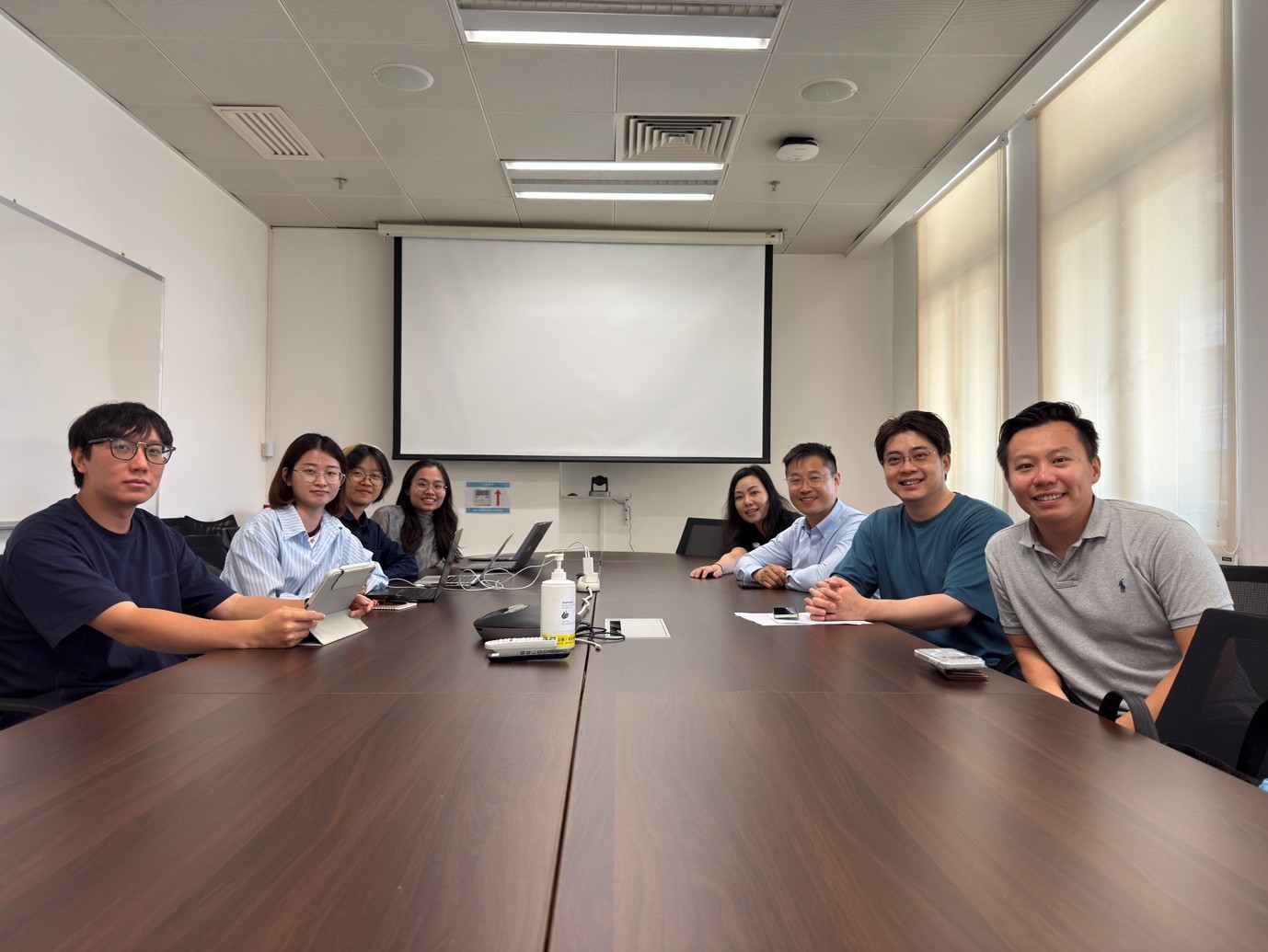
On 16 October 2025, the FED-CEPECE titled “From Impact Assessment to Impactful Research: A Learn-to-Swim Investigation” was held at E33-2036 Faculty of Education. The seminar was delivered by Professor Derwin King Chung Chan, a distinguished researcher who leads an extensive intervention project aimed at enhancing swimming competence among over 16,000 children. His research integrates theoretical frameworks related to motivation with practical strategies for developing swimming skills, which makes it a significant contribution to the field of educational practice.
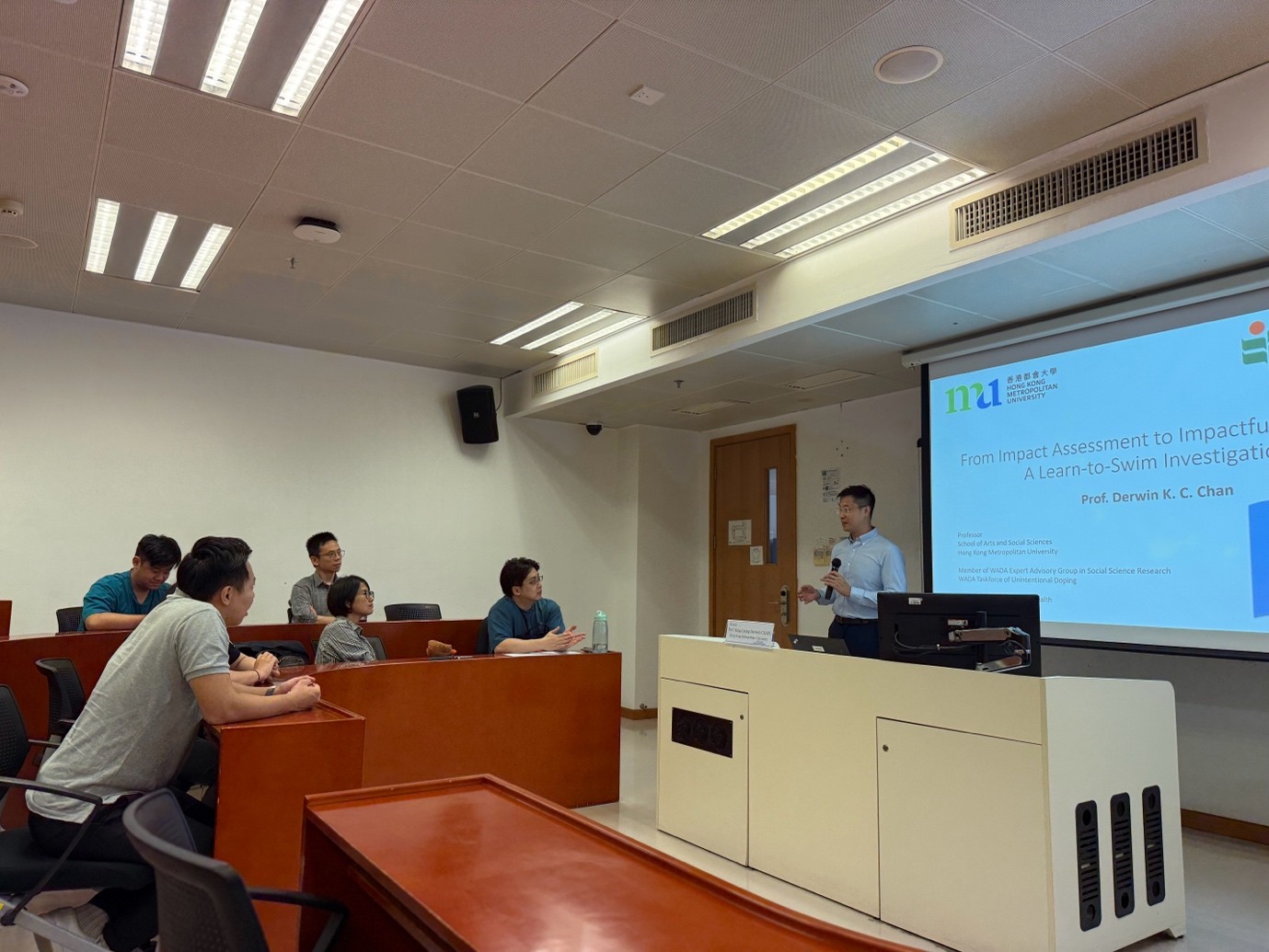
At the outset of the seminar, Professor Chan emphasized the importance of evaluating the effects of early interventions on children’s aquatic abilities and motivational factors. He presented the primary objective of his initiative, which is to assess how participation in swimming programs influences both swimming competence and various theoretically driven motivational variables. The project aims to provide empirical data that sheds light on the interplay between skill acquisition and motivational development in young swimmers.
Professor Chan elaborated on the methodology employed in developing a comprehensive questionnaire designed to accurately assess swimming competence. He underscored the validity of this tool in capturing essential data, which serves as a foundation for analyzing the effectiveness of the intervention. He also detailed the systematic approach taken to design and implement the intervention, emphasizing the need for a holistic view that encompasses not only the enhancement of swimming skills but also the understanding of motivational factors that drive children to engage in aquatic activities.
During his presentation, Professor Chan shared findings from a subsample of participants involved in a 6-year longitudinal study, which investigates the long-term effects of the intervention on swimming competence and motivation. This aspect of the research underscores the commitment to understanding how early interventions can shape aquatic skills and foster a lifelong appreciation for swimming.
Using advanced statistical techniques, Professor Chan illustrated how robust analytical methods are essential for interpreting complex datasets generated from large-scale research. He articulated his belief in the potential for research to inform and enhance educational practices, advocating for evidence-based approaches to swimming education that can be replicated in various contexts.
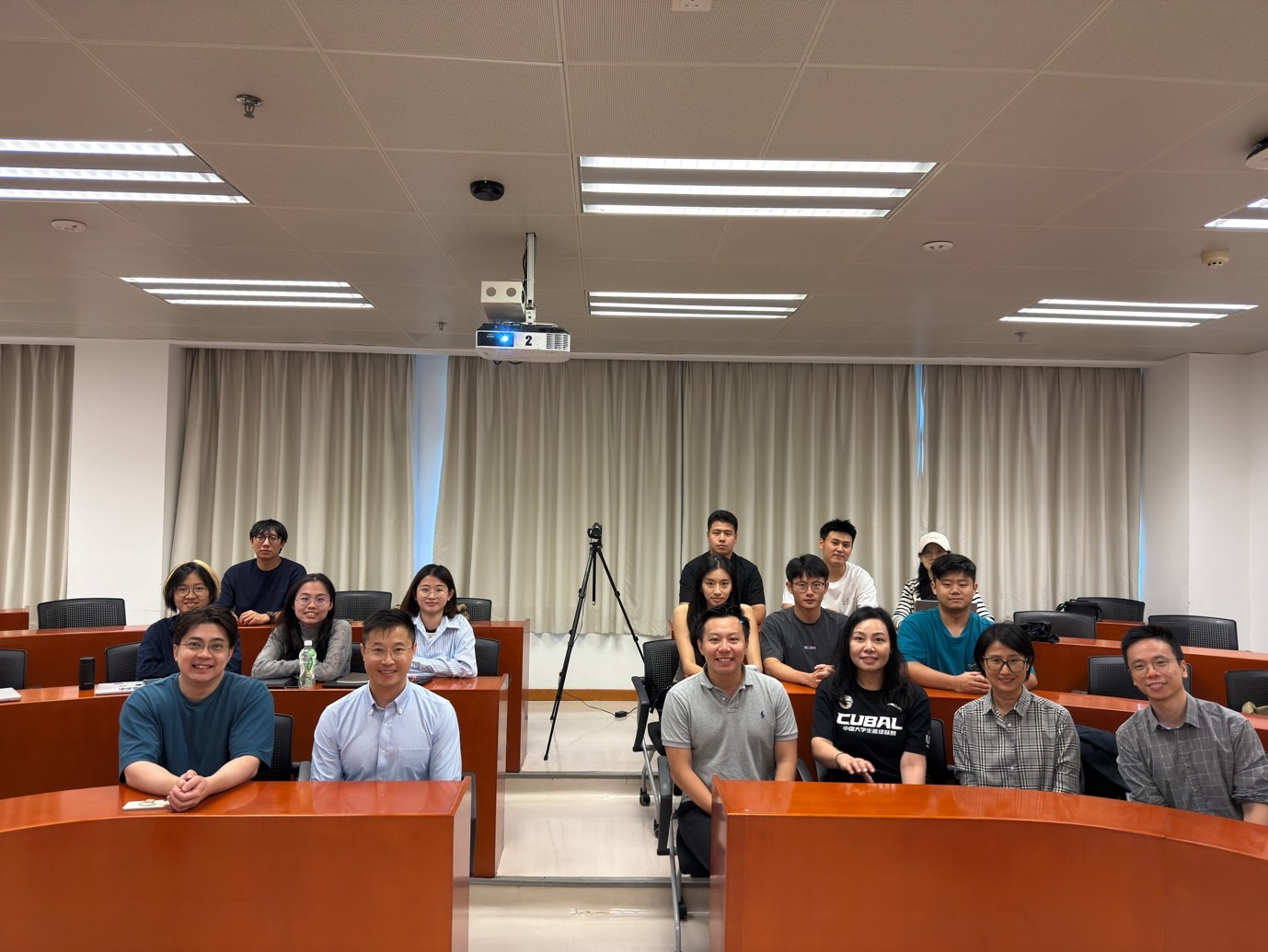
In the lively discussion session that followed, faculty members and research students engaged in an in-depth exchange of ideas with Professor Chan, exploring topics such as the implications of his findings for future research, the integration of motivational theories in educational practices, and the importance of ongoing evaluation in swimming programs. The seminar provided valuable insights into the significance of early intervention and the necessity for continuous assessment in educational settings.
Following the seminar, Professor Chan graciously met with several attendees to discuss a range of research-related topics, including strategies for applying for advanced studies and navigating academic pursuits. He shared his insights on current trends and challenges in the field, offering practical advice on effective publication strategies as Editor-in-Chief. Overall, the discussions fostered collaboration among participants, which enhances a spirit of partnership that could lead to innovative research initiatives in the future.