

Prof. Yin delivered a talk on Conceptualizing Teacher Professional Learning Communities in Chinese Schools, drawing on nearly twenty years of empirical work with schools in Mainland China and Hong Kong.
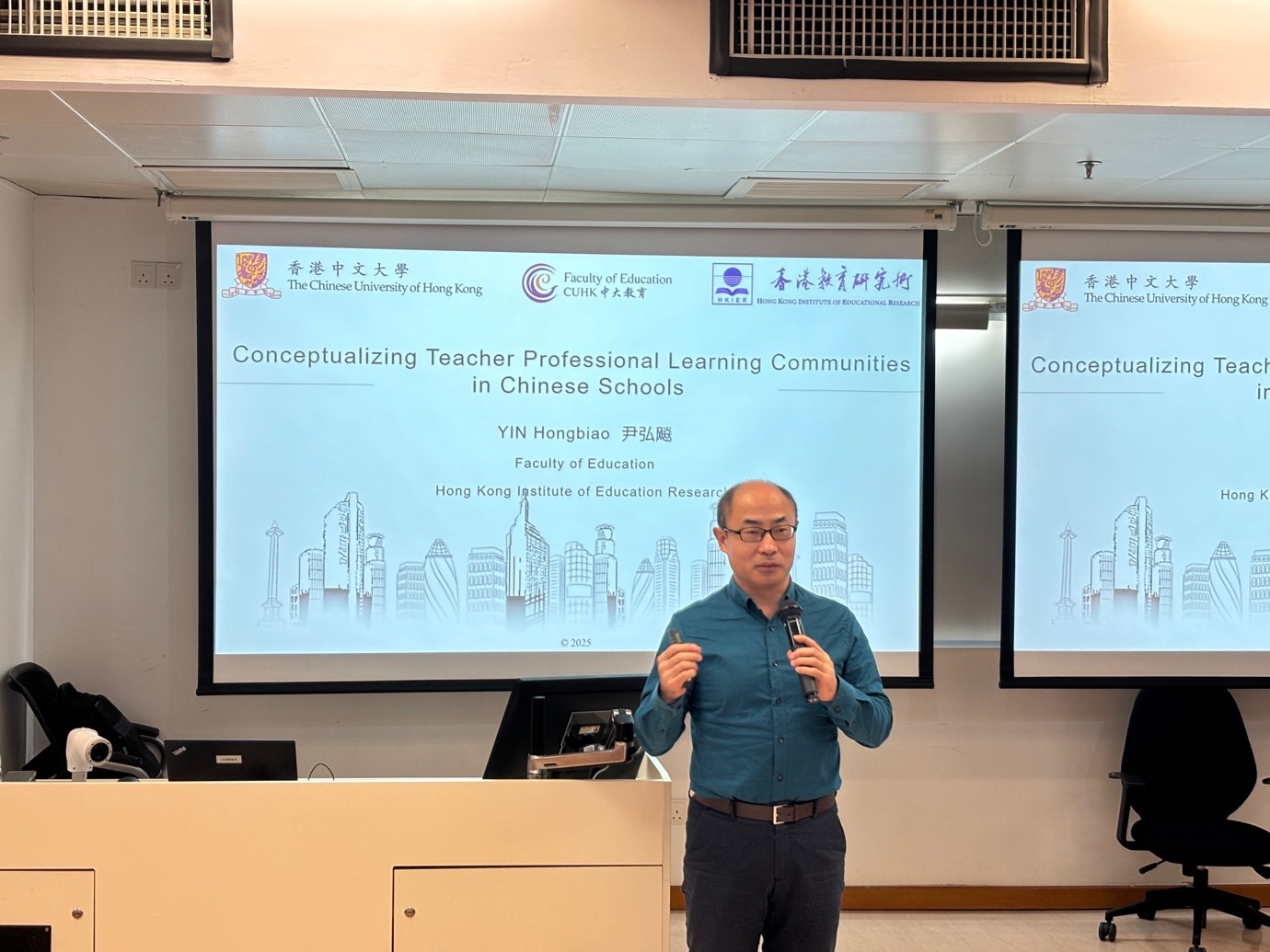
Prof. Yin began by tracing the conceptual shift from “teacher professional development” to “teacher professional learning” and then to “professional learning communities.” He then situated PLCs in the Chinese context. International large-scale assessments such as PISA prompted a “looking East” tendency in the 2000s, directing global attention to Chinese students’ high achievement and the role of teachers’ collaborative learning. Prof. Yin described China’s long-standing teaching–research system, including teaching–research offices, open lessons, and school-based research groups. These structures provide strong institutional support for teacher collaboration but are often mandated, creating what Hargreaves terms “contrived collegiality” rather than fully spontaneous collaboration. As a result, Chinese teacher PLCs show a mixed picture: they can be highly effective for mentoring novice teachers and implementing reforms, yet many teachers experience them as formalistic and burdensome.
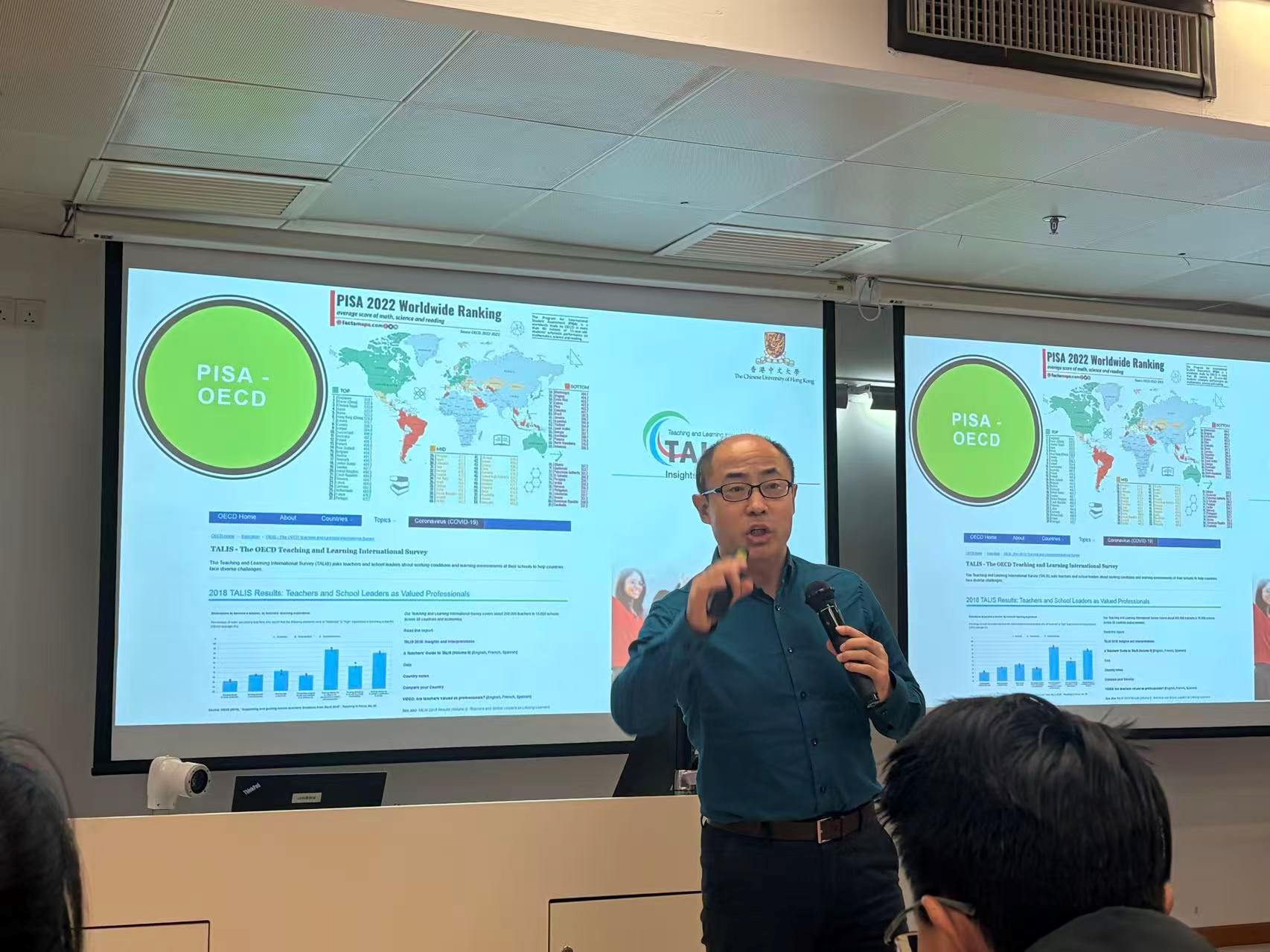
Drawing on his team’s studies, Prof. Yin presented several empirical findings. One study showed that principal leadership and relational practices influence PLC development through faculty trust, but trust in colleagues and trust in principals function differently: trust in colleagues tends to promote PLC engagement, whereas strong reliance on principals may reduce teachers’ participation in peer-based learning. Another multi-level study identified multiple PLC dimensions and demonstrated that not all dimensions are equally beneficial. In particular, reflective dialogue emerged as a key driver of teacher self-efficacy and commitment, whereas the sheer quantity of collaborative activities could even have negative effects when the quality of interaction is low.
Prof. Yin also discussed a Hong Kong kindergarten project, showing that in contexts where collaborative opportunities are relatively scarce, collaborative activities can have stronger positive effects on teachers’ commitment and retention—illustrating the importance of context and cultural factors such as collectivism and high power distance.
In conclusion, Prof. Yin argued that Chinese PLCs are best understood along a continuum between contrived collegiality and genuine professional community. He called for research that combines attention to universal PLC features with sensitivity to cultural and institutional specificities, and for leaders to focus less on the number of activities and more on nurturing trust, reflective dialogue, and meaningful, teacher-owned collaboration.
In the Q&A session, participants raised questions about integrating AI tools into PLCs. Prof. Yin noted that teachers are already beginning to experiment with such tools and suggested this as a promising direction for future research and practice.